Galaxy S27 Ultra Camera Leak: Unveiling a Dramatic Redesign
The flagship smartphone landscape is preparing for a major design shift. According to the latest Galaxy S27 Ultra camera leak, Samsung is planning a complete departure from the individual floating camera lenses used across recent flagship generations. CAD renders and supply chain reports point toward a unified, bold camera island that reimagines both the visual…
The flagship smartphone landscape is preparing for a major design shift. According to the latest Galaxy S27 Ultra camera leak, Samsung is planning a complete departure from the individual floating camera lenses used across recent flagship generations. CAD renders and supply chain reports point toward a unified, bold camera island that reimagines both the visual aesthetic and the underlying hardware setup of Samsung’s flagship line.
For tech enthusiasts across North America, Europe, and global markets, this leak offers an early look into how Samsung intends to redefine mobile photography, camera ergonomics, and processing performance.
1. Galaxy S27 Ultra Camera Leak: The Core Design Changes
Since the Galaxy S22 Ultra, Samsung has maintained a minimalist, separate lens arrangement on the back cover. However, the Galaxy S27 Ultra camera leak indicates that engineering requirements for larger sensor housings and upgraded variable aperture modules have necessitated a dedicated camera island.
┌─────────────────────────────────────────────────────────────┐
│              GALAXY S27 ULTRA CAMERA HOUSING                │
│    Integrated Glass Island • Recessed Sensor Enclosures      │
└──────────────┬──────────────────┬──────────────────┬────────┘
               │                  │                  │
               ▼                  ▼                  ▼
      ┌─────────────────┐ ┌───────────────┐ ┌─────────────────┐
      │  Main Sensor    │ │ Periscope Zoom│ │ Ultra-Wide Lens │
      │ 200MP Gen-3 ISOCELL│ 50MP 10x Optical│  50MP Variable  │
      └─────────────────┘ └───────────────┘ └─────────────────┘
By moving to a unified, raised camera island with a sleek metallic trim, Samsung achieves three key structural advantages:
- Better Thermal Management: The new camera plate acts as a heat sink, allowing the image signal processor (ISP) to run intensive computational photography routines for longer without thermal throttling.
- Reduced Lens Wobble: Re-engineering the rear panel geometry provides a stable foundation when typing on flat surfaces.
- Protection for Advanced Optics: The elevated housing allows deeper recessing of the outer lens elements, providing greater protection against scratches and impacts.
2. Expected Hardware Upgrades and Sensor Specifications
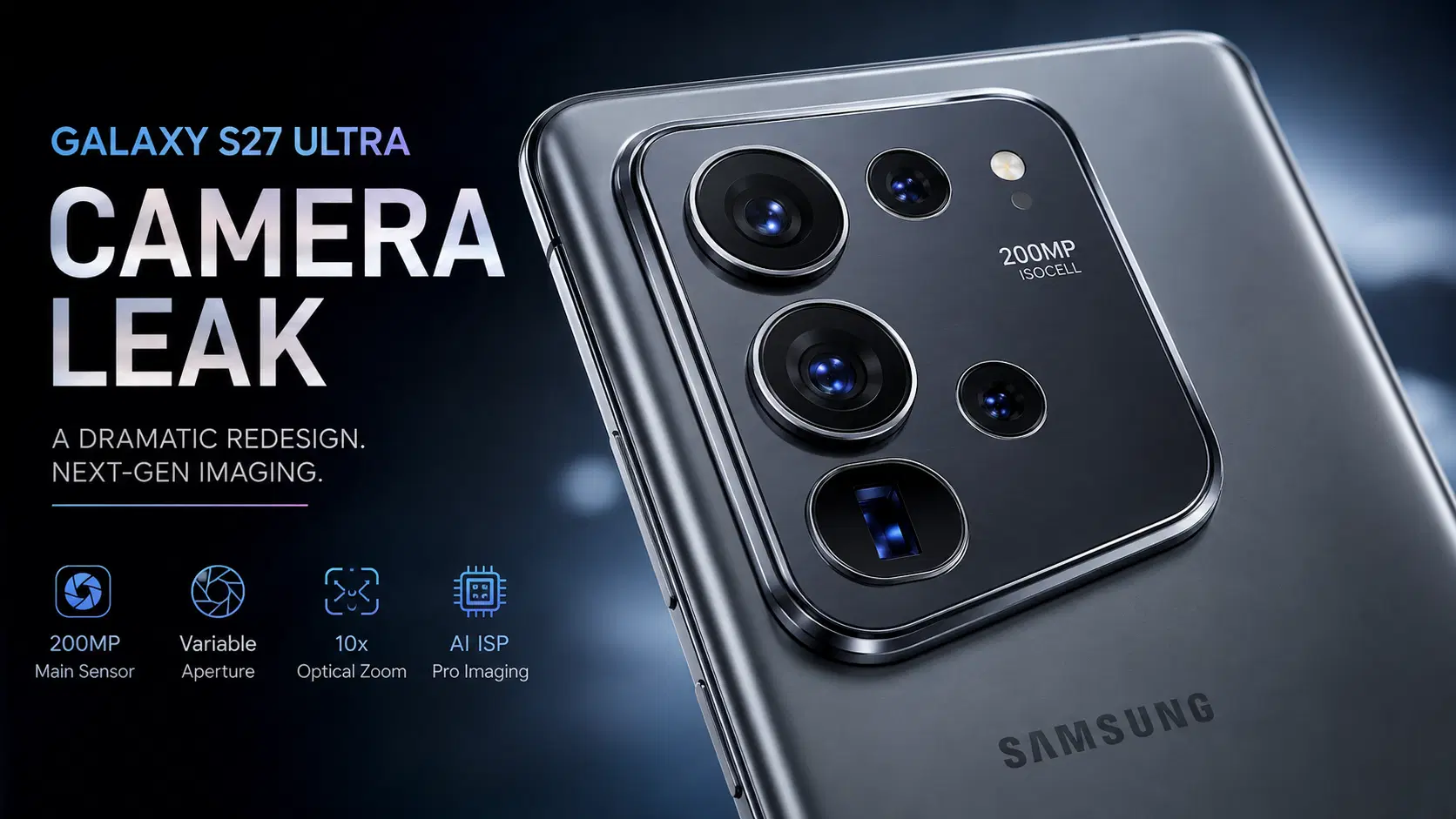
Beyond the physical exterior, the Galaxy S27 Ultra camera leak details significant internal upgrades designed to maintain Samsung’s leadership in mobile imaging.
A. Next-Gen 200MP Main Sensor
The primary camera features an updated 200MP ISOCELL sensor paired with an expanded dynamic range driver. This configuration improves low-light performance by capturing up to 25% more light during night modes while reducing visual noise in dark areas.
B. Dual-Telephoto Architecture
Samsung continues to lead in long-range zoom capabilities. The leak points to a refined dual-periscope system featuring:
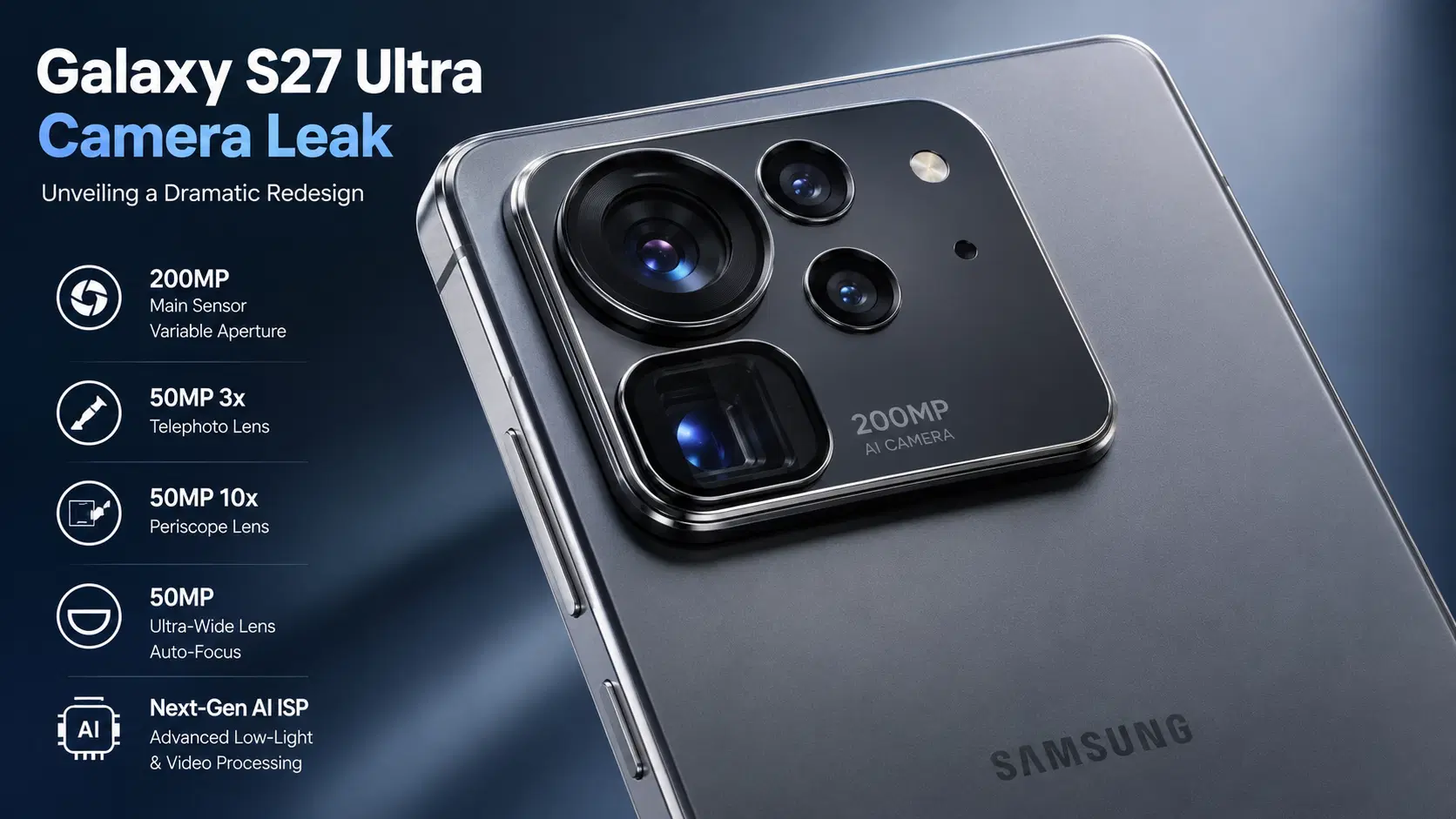
- 3x Mid-Range Telephoto: A 50MP sensor optimized for portrait photography with natural depth blur.
- 10x Long-Range Periscope: A 50MP high-resolution folded lens mechanism that leverages on-sensor crop to deliver sharp digital zoom up to 100x.
Technical Camera Specifications Comparison
| Camera Module | Reported Hardware Spec | Key Functional Upgrade |
| Primary Wide | 200MP (1/1.12″ Sensor) | Physical variable aperture for natural bokeh control |
| Ultra-Wide | 50MP with Auto-Focus | Dual-pixel autofocus with improved macro capabilities |
| Telephoto 1 | 50MP 3x Optical | Enhanced optical image stabilization (OIS) axis |
| Telephoto 2 | 50MP 10x Periscope | Next-gen prism optics for clearer long-range shots |
3. Real-World Photography and AI Upgrades
Hardware is only half the story in modern mobile imaging. The leaked renders reveal how software and dedicated AI hardware work in tandem with the redesigned camera module:
[Camera Capture]
Sensor records raw light ──► AI ISP processes noise reduction ──► Instant preview with zero shutter lag

[Nightography Mode]
Multi-frame synthesis ──► Real-time dynamic range boost ──► Clean low-light final output

[Pro Video Mode]
8K recording at 60fps ──► Real-time HDR tonemapping ──► Instant preview output
Scenario 1: Nightography and Low-Light Processing
The redesigned camera island accommodates larger optics that gather significantly more ambient light. Paired with next-gen neural processing, low-light photography delivers clearer results with shorter exposure times.
Scenario 2: Zero Shutter Lag Action Shots
By offloading computational algorithms to the dedicated Neural Processing Unit (NPU), the primary camera captures moving subjects cleanly, eliminating motion blur in sports and action scenes.
Scenario 3: Cinematic Video Recording
The camera architecture supports 8K video recording at 60 frames per second with real-time HDR processing, giving creators professional-grade dynamic range and color depth directly out of the camera.
4. Privacy, Data Protection, and Processing
As computational camera capabilities expand, user data privacy remains a top priority. Samsung’s processing framework keeps sensitive photo and video metadata protected:
- On-Device Image Processing: Facial recognition, gallery sorting, and generative image edits take place directly on the device using localized AI silicon, keeping personal photos off cloud servers.
- Secure Metadata Stripping: Built-in sharing tools automatically scrub location coordinates and device information before images are exported or sent to social platforms.
- Secure Hardware Enclave: Biometric data gathered via camera sensors remains isolated inside hardware-level security systems like Samsung Knox.
For more details on hardware privacy standards, check out the official guidelines from the Connectivity Standards Alliance.
If you are following upcoming smartphone releases, be sure to read our detailed guide on flagship smartphone trends.
5. Strategic Comparison: Galaxy S27 Ultra vs. Competitors
The camera redesign outlined in the Galaxy S27 Ultra camera leak positions Samsung competitively against other flagship devices:
- Hardware-First Optical Strategy: While competitors rely heavily on software upscaling, Samsung combines high-resolution hardware sensors with optical zoom mechanisms to deliver clear, detail-rich photos.
- Pro-Grade Control: The native camera software continues to offer granular manual controls for ISO, shutter speed, focus peaking, and RAW video export.
- S Pen Integration: Remote camera triggers via the embedded S Pen remain a key feature, making multi-angle group shots and self-taping effortless.
Frequently Asked Questions
What does the Galaxy S27 Ultra camera leak reveal about the design?
The leak shows a shift away from individual floating lenses toward an integrated, raised camera island designed to improve thermal performance, house larger sensors, and reduce camera wobble on flat surfaces.
Will the Galaxy S27 Ultra retain 100x Space Zoom?
Yes, reports indicate that the updated dual-telephoto system, featuring a 50MP 10x optical periscope lens, will continue to support high-clarity 100x digital zoom capabilities.
When is the Galaxy S27 Ultra expected to release?
Samsung typically unveils its flagship Galaxy S series at an Unpacked event in early Q1, following its standard annual release schedule.
Conclusion
The Galaxy S27 Ultra camera leak suggests a decisive update in Samsung’s mobile imaging strategy. By shifting to an integrated camera island housing larger sensors, variable apertures, and upgraded telephoto optics, the S27 Ultra sets a high bar for mobile photography and design aesthetics.
For users seeking top-tier camera hardware, computational power, and refined video features, the S27 Ultra stands out as one of the most anticipated flagship releases on the horizon.